10 November 2026
Why Customized Termite Control Services Deliver Better Results
Presented by @augustgtmk324
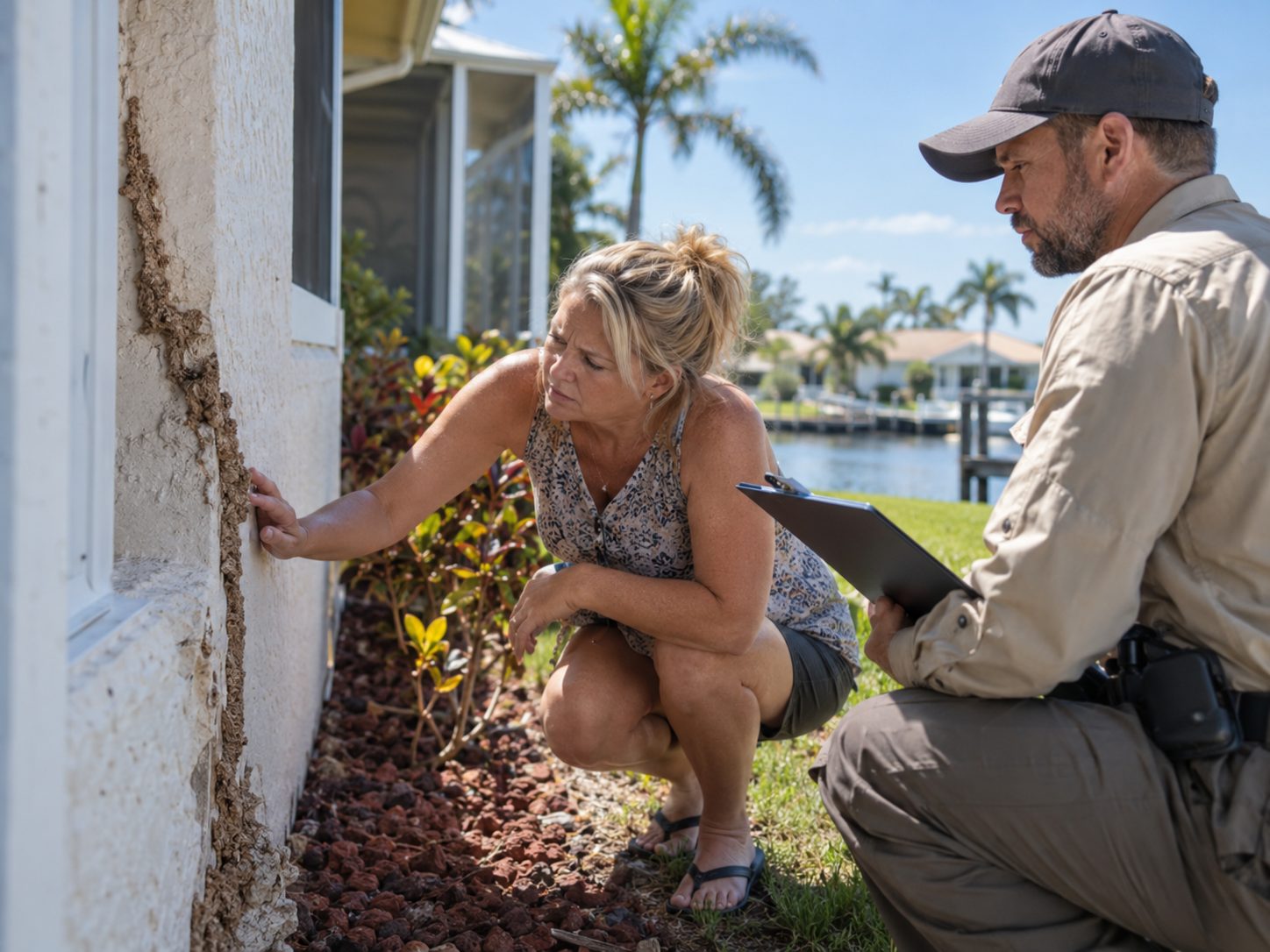
Termites rarely announce themselves when they move in. They work behind drywall, beneath flooring, inside sill plates, and along foundations where few homeowners think to look. By the time visible damage appears, the colony has often been active for months or even years. That is one reason generic treatment plans so often disappoint. Termite problems are not interchangeable, and the homes they affect are not interchangeable either.
Customized termite control services deliver better results because they start with what is actually happening on the property, not with a standard package designed to fit the widest possible market. A slab home in a humid coastal area presents one set of risks. A crawl space home with chronic moisture issues presents another. A historic wood-framed property with additions built over decades needs a different strategy than a newly constructed home with clean grading and modern barriers.
Anyone who has spent time around termite work learns quickly that the strongest treatment is not always the smartest treatment. The best result comes from matching the inspection, the treatment method, the timing, and the follow-up plan to the structure, the termite species, and the conditions that allowed the infestation in the first place. That is where customized service proves its value.
Termite problems are specific, not generic
Homeowners often imagine termite control as a simple question: do you have termites or not? In the field, it is rarely that clean. Two houses on the same street can have very different levels of risk. One may have mulch piled against siding, poor drainage, and a leaking hose bib that keeps the soil damp year-round. The house next door may have no active infestation at all but still show conditions that could invite one later.
Even the term "termites" covers different behavior patterns. Subterranean termites, which are among the most common and destructive in many regions, need contact with soil moisture and often enter through expansion joints, plumbing penetrations, or tiny cracks in foundations. Drywood termites behave differently, living directly in the wood they consume and often requiring a different treatment approach. A one-size-fits-all service model tends to gloss over those differences, and that is where performance starts to slip.
A customized program begins by narrowing the actual problem. Is there an active colony, an old infestation, or only evidence of conducive conditions? Is the damage localized or spread through multiple structural members? Has previous treatment already been attempted, and if so, where did it fail? These questions matter because termite control is not just about applying product. It is about interrupting the colony’s ability to survive, feed, and re-enter.
The inspection is where good results begin
The quality of the outcome usually tracks with the quality of the inspection. That sounds obvious, but it is not always reflected in the work homeowners receive. Some companies spend more time selling than diagnosing. A true termite inspection should be methodical and property-specific. It should consider construction type, moisture sources, access limitations, landscape features, and any history of renovations or previous infestations.
On a practical level, that may mean checking baseboards and window trim indoors while also paying close attention outdoors to grading, wood-to-soil contact, fence attachments, deck posts, and utility entries. In crawl spaces, it often means getting dirty enough to inspect beams, joists, piers, subflooring, and evidence of moisture accumulation. In attics, it can mean looking for signs that do not fit a subterranean termite pattern and may point to another wood-destroying pest or a separate moisture problem.
A customized inspection also identifies what not to treat. That is just as important. If activity is isolated to one area and the structure has no sign of widespread vulnerability, the plan can be tighter and more efficient. If a company proposes the exact same service for every house regardless of findings, that is a sign the service model is built for speed, not accuracy.
I have seen cases where a homeowner was told they needed a full perimeter treatment immediately, only to learn during a more careful second inspection that the main issue was a chronic plumbing leak under a bathroom addition and a small area of active infestation around that moisture source. The repair and targeted treatment solved the problem more effectively than a broader, more expensive approach would have.
Different structures demand different treatment plans
Construction style changes everything. Slab homes can conceal entry points that are difficult to detect visually, especially around plumbing penetrations and expansion joints. Crawl space homes offer more access for inspection and treatment, but they also tend to expose a property to persistent moisture and wood contact issues. Basements introduce another set of vulnerabilities, particularly where finished surfaces hide foundation walls.
Then there is the age of the structure. Older homes often include additions, patched repairs, mixed materials, or outdated construction details that create ideal hidden pathways. A technician treating a uniform new-build subdivision can rely on one set of assumptions. A technician working on a 70-year-old house with a converted porch, patched foundation cracks, and an enclosed breezeway cannot.
Customized termite control services take those details seriously. They adjust where monitoring stations go, where liquid termiticide is applied, how much drilling is appropriate, whether trenching is practical, and how to minimize disruption to finished surfaces. In some homes, a baiting system may be the best fit because it allows long-term monitoring with less invasive treatment. In others, direct wood treatment combined with a soil-applied termiticide may offer faster control. Sometimes the right answer is a combination.
That distinction matters because the goal is not just to "do something." The goal is to choose a method that the structure can support and that the infestation pattern actually justifies.
Moisture control is often the missing half of the job
Many termite failures have less to do with the pesticide and more to do with the environment that remains unchanged afterward. Termites thrive where moisture persists. Leaking spigots, clogged gutters, negative grading, condensation in crawl spaces, and poor ventilation all create conditions that make reinfestation more likely.
This is one of the clearest advantages of a customized approach. Instead of treating the house as if the colony appeared at random, the service addresses why the site became attractive in the first place. That does not mean every termite company performs construction repairs, but the good ones identify the relevant issues and make practical recommendations that fit the property.
A treatment plan that includes moisture correction advice can save a homeowner far more than the treatment itself costs. A relatively small drainage correction or crawl space ventilation improvement can reduce future risk substantially. Without those changes, even a competent treatment may be forced to work against ideal termite conditions year after year.
In real properties, these conditions are often mundane. Soil piled too high against siding. Firewood stored against an exterior wall. A downspout that empties at the foundation. A flower bed whose irrigation keeps the slab edge wet every evening. None of those details sound dramatic, but together they create the kind of persistent invitation that termites exploit. Customized termite control services catch those patterns because they pay attention to the property as a whole, not just the points where damage is already visible.
Colony behavior affects what works
Not all termite control methods solve problems at the same speed or in the same way. Liquid treatments can create a treated zone in the soil that kills or repels termites depending on the product and application. Bait systems work more gradually, relying on foraging termites to carry active ingredients back into the colony. Direct wood treatments can protect vulnerable areas or address localized activity. Void applications can help when termites are active inside specific wall spaces.
A standardized plan often oversimplifies those choices. A customized plan asks better questions. Is immediate knockdown important because active feeding threatens structural members? Termite Control Services Is ongoing monitoring the top priority because the home sits in a high-pressure termite area? Is the structure difficult to trench or drill because of hardscaping, interior finishes, or construction details? Are there children, pets, or access concerns that make one method more practical than another?
That level of decision-making produces better outcomes because it respects trade-offs. For example, bait systems can be excellent for monitoring and colony suppression, but they require proper placement, consistent follow-up, and patience. A homeowner who wants fast reassurance in a home with obvious active mud tubes may be better served by a different or combined approach. On the other hand, a property with limited treatment access and a strong prevention focus may benefit greatly from a well-managed baiting program.
The point is not that one method is universally better. The point is that the right method depends on the situation. Customized termite control services are built around that reality.
Follow-up is not optional
One of the most common misconceptions about termite work is that the job ends when the treatment is applied. Effective control nearly always depends on follow-up. Colonies do not read service invoices, and homes change over time. Soil settles. Landscaping shifts. Moisture returns. Renovations create new vulnerabilities. Monitoring catches what a single visit cannot.
This is another area where customized service tends to outperform generic packages. A property with a history of infestation, heavy surrounding tree cover, and chronic moisture issues may need more frequent checks than a low-risk home with strong preventive conditions. A baiting system requires scheduled monitoring to remain effective. A home that underwent targeted treatment after a localized infestation may need a reinspection schedule focused on adjacent risk areas.
Good follow-up also allows the provider to tell the difference between new activity, residual evidence, and harmless staining or damage from an older infestation. That distinction saves homeowners from both false alarms and false confidence. It is common for someone to discover old wood damage during a remodel and assume the house is under immediate attack, when a professional inspection may show no active infestation at all. It is just as common for subtle new mud tubing to go unnoticed because the property owner believes a prior treatment means no future checks are necessary.
Customized service plans create a monitoring rhythm that fits the property rather than forcing every client into the same schedule.
Cost looks different when you measure the whole problem
Some homeowners hesitate at customized service because they assume "customized" means "more expensive." Sometimes it does mean a higher upfront cost, especially when the inspection reveals a complex infestation or structural conditions that increase treatment difficulty. But looking only at the first invoice often leads to the wrong decision.
The real comparison is between targeted, appropriate control and the cost of under-treating or mis-treating the property. Structural Termite Control Services repairs from termites can run from a few thousand dollars for localized framing work into much larger sums when floor systems, wall studs, trim, or support components are involved. Add the cost of repeated treatments that do not address the source of the problem, and a supposedly cheaper plan can become the expensive one very quickly.
There is also the cost of disruption. Over-treatment can mean unnecessary drilling, trenching, or interior access. Under-treatment can mean recurring visits, continued anxiety, and damage that expands while the owner assumes the issue is handled. Customized termite control services often reduce both forms of waste because they focus on the actual risk profile of the property.
A straightforward way to think about value is this: a good termite plan should spend money where it changes the outcome and avoid spending money where it does not. That is what customization is for.
What homeowners should expect from a tailored service
A customized termite service should feel specific from the first conversation. The provider should ask about the age of the home, prior infestations, signs you have noticed, and any repairs or moisture issues. On site, they should explain what they are seeing in plain language, not hide behind vague warnings. If they recommend treatment, they should be able to say why that treatment fits your home and what alternatives were considered.
The strongest providers usually cover five core points clearly:
- Whether the infestation appears active, old, or uncertain.
- Which termite species or termite pattern they suspect.
- What structural or environmental conditions are contributing to risk.
- Why the proposed treatment method fits the property.
- What follow-up or warranty terms are necessary to maintain protection.
That level of clarity matters. It allows the homeowner to evaluate the recommendation on its merits, not just on fear. It also makes it easier to compare companies. If one proposal is highly detailed and another looks like a generic package copied from a template, the difference tells you something important.
Why local knowledge improves customization
Termite pressure is regional. Soil type, rainfall, freeze cycles, landscaping norms, and construction practices all influence how infestations develop and how treatments perform. A company with real local experience understands where homes in that area tend to fail. They know whether slab penetrations are a common entry point, whether crawl spaces in older neighborhoods trap moisture, and which treatment methods hold up best under local conditions.
That local knowledge becomes even more valuable in edge cases. Waterfront properties, homes near wooded lots, houses with extensive hardscaping, and older homes with mixed foundations often challenge standard approaches. A provider who has seen those issues repeatedly can customize faster and with better judgment than someone relying mainly on a national script.
There is a practical confidence that comes from hearing a technician say, in effect, "We see this all the time in houses built in this decade with this type of addition." It does not make the problem less serious, but it does suggest the treatment plan is grounded in experience rather than guesswork.
Better results come from fit, not force
The temptation in pest control, especially from the outside looking in, is to assume bigger intervention equals better protection. With termites, that is not always true. Better results come from fit. The method has to fit the species. The scope has to fit the infestation. The schedule has to fit the risk. The recommendations have to fit the property’s real vulnerabilities.
That is why customized termite control services consistently outperform generic solutions. They begin with observation, not assumption. They take structure, moisture, access, colony behavior, and long-term monitoring seriously. They recognize that a treatment plan is only as good as the diagnosis behind it.
For homeowners, that translates into something concrete: fewer missed entry points, fewer wasted treatments, better long-term prevention, and a stronger chance of solving the problem before it becomes expensive structural damage. In termite work, precision is not a luxury. It is the difference between temporary reassurance and lasting control.
Maximum Pest Control
836 NE 7th Terrace Suite #5
Cape Coral, FL 33909
+1 239-772-7363
FAQ About Termite Control Services
What are two signs of a termite infestation?
Mud tubes along a foundation and piles of shed wings near doors or windows are two signs to investigate. Mud tubes are associated with subterranean termites. A licensed inspector can identify the insect and assess whether there is active infestation.
How many years does a termite treatment last?
There is no single timeline for all treatments. The method, site conditions, and maintenance affect how long protection lasts. Bait systems rely on monitoring and service. Ask the provider for the recommended inspection schedule and the terms of any coverage.
Is Termite Treatment Expensive in Cape Coral?
Cost depends on the termite species, the size and construction of the property, the extent of activity, and the treatment method. Request a written estimate after inspection and ask whether monitoring, follow-up visits, and renewals are included.